
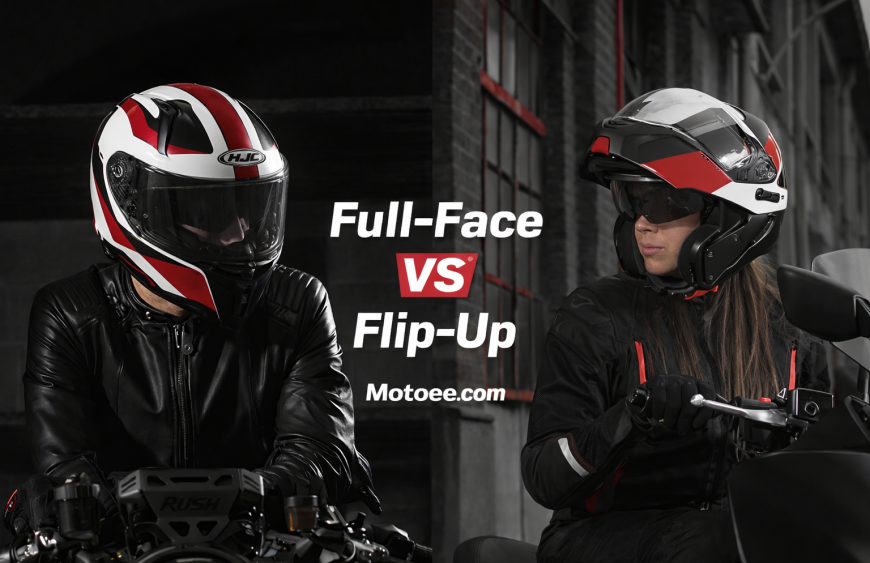
How to choose a motorcycle helmet is one of the most important decisions every rider will make, as the right helmet directly affects safety, comfort, and riding performance.
Two of the most popular helmet types today are full-face helmets and flip-up (modular) helmets. While they may look similar at first glance, they are designed for different riding styles and needs.
In this guide, we’ll explain the differences, pros and cons, and help you choose the right helmet for your riding habits.
Why Helmet Choice Matters
A motorcycle helmet is not just protective gear — it’s a critical safety system. The right helmet should:
- Provide certified impact protection
- Fit securely and comfortably
- Match your riding style and conditions
- Reduce wind noise and fatigue
- Offer proper ventilation
Choosing the wrong type can lead to discomfort, distraction, or reduced protection.
What Is a Full-Face Motorcycle Helmet?
A full-face helmet offers complete coverage of the head, including the chin and jaw. It features a fixed chin bar and a solid outer shell designed for maximum impact protection.
Advantages of Full-Face Helmets
- Highest level of protection due to rigid construction
- Better aerodynamics at higher speeds
- Reduced wind noise compared to open designs
- Excellent protection against weather, debris, and insects
- Preferred choice for sport, touring, and track riding
Potential Downsides
- Less convenient for short stops
- Can feel warmer in slow city traffic
- Communication requires removing the helmet
Best for:
Sport riders, long-distance touring, highway riding, and riders who prioritize maximum safety.
What Is a Flip-Up (Modular) Motorcycle Helmet?
A flip-up helmet, also known as a modular helmet, features a hinged chin bar that can be lifted upward. This allows the helmet to switch between full-face protection and open-face convenience.
Advantages of Flip-Up Helmets
- Easy to talk, drink, or check directions without removing the helmet
- More comfortable during frequent stops
- Ideal for commuting and touring
- Often compatible with Bluetooth intercom systems
Potential Downsides
- Slightly heavier due to hinge mechanisms
- Marginally less impact resistance compared to full-face helmets
- Can be noisier at high speeds
Best for:
Urban riders, commuters, touring riders, and those who value convenience and versatility.
| Feature | Full-Face Helmet | Flip-Up Helmet |
|---|---|---|
| Protection level | ⭐⭐⭐⭐⭐ | ⭐⭐⭐⭐ |
| Convenience | ⭐⭐⭐ | ⭐⭐⭐⭐⭐ |
| Weight | Lighter | Slightly heavier |
| Noise control | Better | Moderate |
| Touring comfort | High | Very high |
| City riding | Good | Excellent |
Which Helmet Should You Choose?
Choose a full-face helmet if:
- You ride at higher speeds
- You prioritize maximum protection
- You do long highway or sport rides
- You want better noise isolation
Choose a flip-up helmet if:
- You commute daily or ride in cities
- You stop frequently
- You use intercoms or navigation
- You want flexibility and comfort
There is no universal “best helmet” — only the best helmet for your riding style.
Helmet Safety Standards You Should Look For
Regardless of whether you choose a full-face or flip-up helmet, safety certification should always be a top priority. Reputable motorcycle helmets meet internationally recognized standards and, in some cases, include advanced protection systems.
Key Safety Standards and Technologies
- FIM Racing Homologation
The highest level of helmet certification, required for professional motorcycle racing. FIM-approved helmets undergo extreme impact, penetration, and rotational force testing and represent top-tier safety performance. - ECE 22.05 / ECE 22.06
The European safety standard required for road use in most European countries. The newer ECE 22.06 includes more rigorous impact testing, higher speed thresholds, and additional test points. - DOT (Department of Transportation)
A mandatory certification for helmets sold in the United States, focusing on impact absorption, penetration resistance, and retention system strength. - SNELL
A voluntary certification with stricter testing procedures than DOT and ECE, commonly found on racing and high-performance helmets. - MIPS (Multi-directional Impact Protection System)
An advanced safety technology designed to reduce rotational forces during angled impacts. MIPS allows slight movement between helmet layers, helping protect the brain from rotational motion injuries.
Tip: A helmet can be both ECE-certified and equipped with MIPS or FIM approval. Always check the product description to see which standards and technologies are included.
Final Thoughts
Both full-face and flip-up helmets offer excellent protection when chosen correctly. The key is understanding how and where you ride.
At Motoee, we offer a carefully selected range of full-face and flip-up motorcycle helmets designed for safety, comfort, and performance — so every rider can find the perfect fit.